THANK YOU FOR SUBSCRIBING
× 
Startup City Weekly Brief
Be first to read the latest tech news, Industry Leader's Insights, and CIO interviews of medium and large enterprises exclusively from Startup City
Startup City


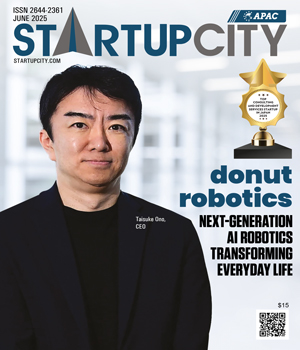
donut robotics
Next-Generation Ai Robotics Transforming Everyday Life
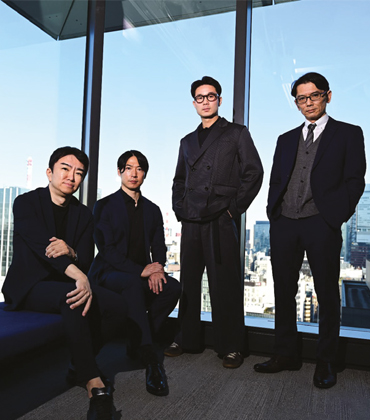 Taisuke Ono, CEO;Jun Saigo, COO;Ozora Ogino, CAIO;Yuichiro Hayashi, CTO
The industry has traditionally followed a “product-out” approach, where robot development focuses more on showcasing the latest technologies. This raises the fundamental question, “Do these robots meet real-life needs?”
donut robotics takes a different approach with its “market-in” philosophy. Instead of creating novelty machines, it develops AI-integrated robots designed to solve societal challenges. Combining AI’s vast knowledge with robotics, it unlocks the full potential of both.
“The power of robots and advanced AI can elevate human capabilities. This fusion of technology accelerates the transition to a future where people can live happier than ever before,” says Taisuke Ono, CEO.
I’ve coined a term for the superhuman entities that will emerge from the fusion of human abilities and AGI, HuGI. These beings will retain human emotion, memory and intuition, while leveraging AGI’s predictive power and strategic intelligence
When Ono founded donut robotics nearly a decade ago, the focus was on translation and communication in international airports. It was a pioneer in an industry that has since flourished globally. The early entry positioned it as a trailblazer in shaping the future of robotics.
Cinnamon, a monitoring and customer service robot with advanced translation capabilities, was selected for the Haneda Airport Robot Project in 2017. In public spaces, Cinnamon excels at providing multilingual support and customer engagement. It also serves as an excellent receptionist when deployed in corporate settings. Redefining home monitoring, it allows users to remotely control it via a smartphone, making it ideal for monitoring infants, seniors and pets. With sophisticated voice-based health diagnostic technology, it is poised to integrate more practical features for daily use.
 A major turning point occurred during COVID-19 when global travel restrictions sharply declined the demand for translation and communication robots at international airports. In response, donut robotics introduced the smart mask, a wearable device that can transmit voice and perform translation using advanced dialogue technology. This innovation garnered an overwhelming global response.
“The real excitement for us is envisioning how humanity can benefit from the breakthroughs robots will spark—then translating that vision into products and presenting it to the world,” says Jun Saigo, COO.
Creating Technology that Truly Matters
Powered by generative AI, donut robotics’ customer-service robots are scheduled to be introduced across various industries, including electronics retail, supermarkets, and airports. Unlike traditional robots that require manual programming, these advanced machines can think, act, and hold natural conversations independently.
When it comes to translation, donut robotics’ robots offer clear advantages over smartphone-based solutions. They can physically orient themselves to face the speaker, accurately capture voices and provide real-time responses with movement and spatial awareness, making interactions smoother and more natural. While smartphone users must open an app, select a language, and start the translation manually, Donut’s robots respond instantly. Just say “Translate this!” and the conversation begins.
After years of research, donut robotics has gained a deep understanding of how robots and AI can best serve customers. Even subtle adjustments to a robot’s interface, such as small gestures, can significantly enhance its approachability and relatability, fostering a strong connection with people.
-
The power of robots and advanced AI can elevate human capabilities. This fusion of technology accelerates the transition to a future where people can live happier than ever before
After years of research, donut robotics has gained a deep understanding of how robots and AI can best serve customers. Even subtle adjustments to a robot’s interface, such as small gestures, can significantly enhance its approachability and relatability, fostering a strong connection with people.
“Large Language Models have transformed robot development, demanding design philosophies similar to managing people. Soon, robots themselves will carry out their own economic activities,” says Yuichiro Hayashi, CTO.
Pushing the Envelope of Functionalities with Generative Al-Driven Robots
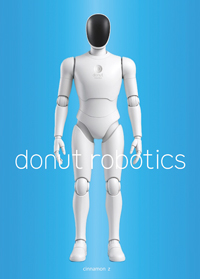 donut robotics’ generative AI-powered robots overcome the limitations of traditional AI robots, which were slow, relied on a few preset phrases, and often failed to justify their cost. Donut’s robots can interact more naturally, respond faster and behave like humans. In the coming years, generative AI is expected to evolve into competent AI agents, making them more approachable and engaging, especially for people with limited IT literacy.
The convergence of humans and AI is accelerating. As people spend more time engaging with digital content on their smartphones, they have formed emotional connections with AI. The line between the physical and digital worlds is increasingly blurred, with individuals staying continuously connected to powerful AI systems and, eventually, artificial general intelligence (AGI).
“I’ve coined a term for the superhuman entities that will emerge from the fusion of human abilities and AGI, HuGI,” says Ono. “These beings will retain human emotion, memory and intuition, while leveraging AGI’s predictive power and strategic intelligence.”
Leading the Charge in Ethical Robotics and Humanoid Tech
donut robotics ensures AI-driven robots empower people and is committed to this mission in every move. It strongly emphasizes the ethical use of AI in all its robotic solutions.
“Since AI and robots have no instinctual desire to survive, they have no reason to go rogue, steal Earth’s resources or destroy humanity,” says Ono.
 However, AI systems can still be programmed to execute dangerous commands, such as “eliminate humanity,” highlighting the need for global regulations to prevent developers from creating harmful directives.
“We drive strategic integration of cutting-edge innovations, accelerate business transformation, and establish new industry paradigms while ensuring ethical implementation and human-AI harmony in this revolutionary era,” says Ozora Ogino, CAIO.
Looking toward a promising robotic future, donut robotics draws on its robot-control AI and humanoid hardware to surpass the capabilities of current industry robots. Its practical, user-centered design further strengthens its position as a leading Japanese brand in humanoid tech development.
donut robotics is at the forefront of innovation, solving challenges once thought insurmountable and offering solutions that may even resist human aging.