
THANK YOU FOR SUBSCRIBING
× 
Startup City Weekly Brief
Be first to read the latest tech news, Industry Leader's Insights, and CIO interviews of medium and large enterprises exclusively from Startup City
Startup City: Specials Magazine
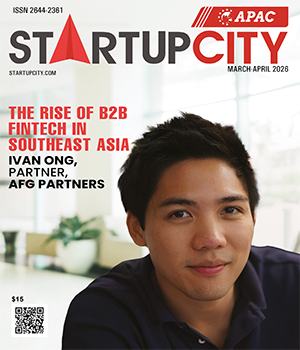
Historically, entrepreneurs have given more attention to consumer fintech than to B2B fintech. This is no surprise as consumer spend is more top of mind and easier to relate to – as consumers, we benefit directly from spending on platforms such as Amazon, Lazada, Shopee etc. B2C to B2B shift In recent years, the focus of entrepreneurs appears to be moving from B2C to B2B for various reasons, notably: • The B2C fintech space is becoming overcrowded and commoditised with many models getting replicated • B2C fintechs are prone to high customer acquisition costs as a result of over competitiveness where only the strongest and most well-funded companies survive • The B2B model offers more predictability, visibility and stickiness of cash flows • Incumbent institutions are actively seeking fintech partnerships to counter the wave of disruption and tap into new businesses • Perhaps most importantly, the B2B fintech market is many times larger and underpenetrated compared to the B2C market, presenting a greenfield opportunity for entrepreneurs to capture significant value B2B fintech evolution 1.0: The evolution of B2B fintech waves started with tackling a core area of fintech – payments. Paypal in the early 2000s was the most notable fintech to emerge from the 1.0 era and offered merchants the ability to transact with customers. 2.0: Emerged in the 2010s with use cases expanding past payments to areas such as infrastructure (Stripe, Plaid), commerce (Square, Shopify), lending (Afterpay, Affirm, HR (Zenefits, Rippling) and finance operations (Bill.com, Blackline). 3.0: 3.0 is evolving in the 2020s as a function of the rapid pace of advancement in technologies. We’re seeing a mesh of fintech themes with broad technology trends such as blockchain, AI/ML and big data that will broaden the universe of use cases even further.
Top Sales Training Platform in Apac 2026
Sales teams operate in fast-moving environments where time is limited, and performance expectations are high. Many teams have experienced training that is still built around long-form courses, delayed reinforcement, and classroom-style delivery, which struggle to deliver real-world impact. Founded in 2021 and headquartered in Melbourne, Australia, frntlne was built to disrupt traditional sales training by aligning training with the real pace and pressures of frontline teams. How does frntlne design sales training to match frontline pace and pressure? Led by CEO Michael Solomon, with offices in Sydney and Dublin, frntlne has grown into a mobile-first sales training platform trusted by global brands including Bacardi, Ryanair, Pernod Ricard, Ramsay Health, and Asahi Beverages. Its focus is simple and centered on delivering training that is practical, relevant, and useful in real situations. What training philosophy guides frntlne’s approach to data-driven, science-backed learning? “We believe training should be data-driven and science-backed – meeting frontline workers and salespeople where they’re at, and reflect the situations and objections they actually face” says Michael Solomon, CEO at frntlne. Rather than optimizing for content volume, frntlne focuses on building confidence, driving behavior change, and improving performance. Training is grounded in real sales moments and delivered in short-form, highly relevant video that fit naturally into daily workflows. Micro-video and knowledge reinforcement in the form of timed refreshers ensure knowledge is available precisely when it matters, such as before a customer interaction, during a product launch, or when handling objections..

Card‑Based Settlement System

Afisherman in Osaka, a street vendor in Jakarta and a gig worker in São Paulo, what connects them? They operate outside traditional banking systems, where cash dominates, financial access is limited and healthcare is often an afterthought. Despite progress in financial inclusion, genuine autonomy— secure payments, access to credit and the ability to plan for both economic and personal well-being—remains out of reach for many. Kort Valuta is reshaping this reality, putting financial and personal health in the hands of all individuals. Instead of relying on traditional institutions, it leverages IDTech, bridging fintech and health tech through solutions like the Visa prepaid card and TwooCa Ring, the world’s first smart ring that integrates digital payments and health tracking. More than just a wearable, it acts as a financial passport, enabling users to build digital credit profiles, receive AI-driven financial guidance and manage transactions effortlessly while monitoring their health. The TwooCa app integrates everything into a mobilefriendly ecosystem, giving users a unified platform to manage their identity, finances and health data. A digital wallet linked to a Visa prepaid card or ring allows for secure transactions from a single device. “For underserved populations, from Japan’s cash-heavy market to the global stage, this is a shift in financial control,” says Hideki Shibata, CEO of Kort Valuta. “Digital payroll solutions remove long-standing barriers for unbanked workers, while AI concierge services provide real-time, personalized recommendations to help users make informed financial decisions.” One ID to Manage Them All IDTech marks the next evolution in financial empowerment. Merging identity verification with financial tools gives individuals complete control over their credentials and transactions—without banks, intermediaries or institutional gatekeeping. Personal identity has long been fragmented across multiple systems—an employee ID for work, a membership card for subscriptions, a student ID for education and a medical card for healthcare—each controlled by different institutions. IDTech consolidates these into a single, mobile-enabled identity system, eliminating the need for physical credentials and third-party verification. “IDTech goes beyond digital storage; it redefines financial identity,” says Shibata. “In traditional banking, institutions decide creditworthiness based on credit scores and financial history, creating barriers for those without an established banking record. We are flipping the script, allowing users to build a digital financial reputation based on real-time transactions and interactions.” Pay, Save and Prosper Stronger financial well-being starts with improving ‘money health,’ which requires rethinking the entire financial journey, from earning to saving, spending and beyond. A major issue is the massive number of people who live paycheck to paycheck. Traditional financial systems do little to break their cycle. Wages are deposited, but the burden of budgeting, allocating income and making smart financial decisions falls entirely on the individual. Kort Valuta’s TwooCa app takes a different approach with the AI-driven TwooCa Concierge.
Cultural Exchange & Tourism Platforms
Storied history meets modern marvels in Japan—a paradise that constantly enchants travelers at every turn. EXest crafts memorable travel experiences with expert guides who unveil the authentic spirit of Japan, bringing its rich cultural heritage, unforgettable cuisine and history to life. For many foreign tourists, Japan is like a fascinating storybook written in a language they can’t fully understand. The unfamiliar language and cultural differences create invisible walls that make it hard to truly experience the country. Hidden gems and local experiences beyond the popular tourist destinations are missed. Tourists have heard of Tokyo’s buzz, Kyoto’s charm and Osaka’s flavors, but the more profound chapters—the hidden villages, the timeless traditions, the soul of the culture—remain just out of reach. EXest connects travelers with qualified, English-speaking local guides who offer personalized, immersive journeys beyond the typical tourist trail. Travel becomes about more than just a vacation. It’s a powerful avenue for education. With the largest network of certified and licensed guides, EXest thoughtfully creates every moment to ensure that visitors experience Japan in a way that resonates long after they’ve returned home, sparking a lifelong love for the country. “We strive to transform every trip to Japan into more than just a vacation. A series of ‘wow’ moments encourages travelers to engage and foster meaningful cultural exchanges with the local community,” says Yukihiro Nakabayashi, Founder and CEO.

CXO INSIGHTS

Promising Signs for a Resurgent Tech Ecosystem in Japan
Shun Nagao, Venture Partner, White Star Capital

A New Era of AI-Driven Seafaring
Niklas Holck, Founder & CEO, Tradeworks.vc and Shail Barthwal, Founder & CEO, Nexus Ocean AI

8 Critical Factors For Scaling a B2B Startup
Patricia Poon, Managing Partner and Founder, Belmond Capital Limited

Evolving the Digital Wave in the Start-Up Space
Jeremy Loh, Co-founder and Managing Partner, Genesis Alternative Ventures

Talent Boom for Start-Ups!?
Jordan Green, President Emeritus/Founder, Melbourne Angels Inc


IN FOCUS

Operational Maturity in Asia-Pacific Sales Training Platforms
Asia-Pacific sales training platforms emphasize precision enablement, overcoming complexity through integration, simplicity, and scalable innovation, driving performance regionally.

Sales Training Platforms for Modern Frontline Teams
Training that supports this diversity without creating administrative complexity offers executives greater control and clearer visibility into capability gaps.
EDITORIAL
Executing Growth With Structure and Real-World Alignment
In an environment where scale, speed, and execution discipline increasingly define startup success, this edition of Startupcity APAC examines how organizations are translating ambition into measurable performance across sales enablement, venture strategy, and ecosystem development.
This edition highlights frntlne, as the Top Sales Training Platform in APAC 2026. Built to address the realities of frontline sales environments, frntlne has redefined how training supports performance by aligning learning directly with real sales moments. Its mobile-first, micro-training model replaces long-form, passive instruction with short, highly relevant content delivered precisely when it matters. By focusing on behavior change, confidence building, and reinforcement rather than content volume, frntlne has enabled global brands to improve engagement, shorten ramp-up times, and drive consistent sales execution across regions. Its in-house content studios and emphasis on real-world relevance position the platform as a practical infrastructure layer for modern sales teams.
Beyond the cover story, this issue highlights organizations shaping the broader startup and investment landscape in Asia. Mosaic Venture Lab, under the leadership of Managing Director Johnny Yu, brings a structured, analytical perspective to venture capital dynamics. By unpacking valuation negotiation as a function of risk management, fund economics, governance, and long-term alignment, the firm contributes clarity to one of the most critical and often misunderstood aspects of startup financing.
From an execution standpoint, John Lim, Partner at Meet Ventures, demonstrates how disciplined venture programs can bridge fragmented markets, regulatory complexity, and corporate startup collaboration across Asia. Its work supporting cross-border market entry and ecosystem building underscores the importance of structured execution in accelerating innovation outcomes.
Together, these stories affirm a central takeaway. Sustainable growth in today’s startup economy is built on relevance, structure, and execution. We invite readers to explore the insights in this issue and engage deeply with the leaders shaping practical, scalable pathways forward.
