THANK YOU FOR SUBSCRIBING
× 
Startup City Weekly Brief
Be first to read the latest tech news, Industry Leader's Insights, and CIO interviews of medium and large enterprises exclusively from Startup City
Startup City


Far UV Technologies
Designing Continuous Air Hygiene Systems for Real-World Environments
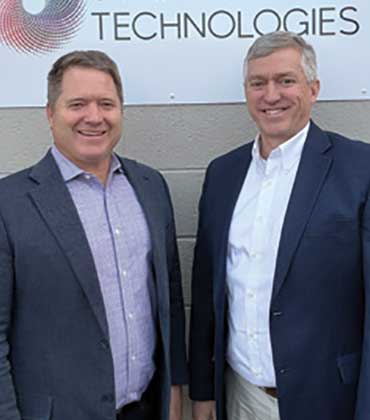 Janaica Marie Arnado, SSE Analyst
Far UV Technologies approaches this challenge by treating air hygiene as a systems problem rather than a single-product solution. Its model focuses on continuous pathogen mitigation within active environments.
“We do not think about air hygiene as a single-product problem. We look at it as a systems challenge that requires continuous pathogen mitigation, practical deployment in occupied spaces and the flexibility to match the right control strategy to the environment,” says Janaica Marie Arnado, SSE analyst.
Moving Beyond Single-Point Disinfection
A key issue organizations face is balancing effective pathogen control with operational continuity. Healthcare facilities, schools and public spaces require solutions that function without interrupting workflows or relying heavily on manual intervention.
Far UV Technologies addresses this by offering a multi-layered platform that includes whole-room Far-UVC systems, upper-room germicidal UV, HEPA filtration and specialized treatment configurations. This allows the company to tailor solutions based on occupancy patterns, environmental constraints and use-case requirements.
Its focus on continuous, passive protection ensures that pathogen mitigation occurs during normal activity. This reduces reliance on repeated manual cleaning while maintaining consistent air hygiene levels throughout the day.
By aligning solutions with real-world usage, the company enables organizations to maintain healthier environments without compromising functionality.
Integrating Safety, Validation and Practical Deployment
Deploying air hygiene technology requires more than effectiveness alone. Organizations must ensure that solutions meet safety thresholds, integrate with existing systems and withstand regulatory scrutiny.
Far UV Technologies addresses this through a methodology that begins with application design. Each project is evaluated based on space usage, airflow conditions and risk factors before selecting the appropriate combination of controls.
Validation is conducted through peer-reviewed evidence, radiometric measurement and as-installed confirmation practices. This approach emphasizes delivered dose verification and installation quality rather than relying solely on theoretical performance.
Safety is embedded into every deployment through filtered outputs, exposure-aware configurations and adherence to accepted photo biological frameworks. This ensures that solutions operate within defined safety parameters while maintaining effectiveness.
Far UV Technologies implemented continuous Far UV-C protection within the buses, creating a passive layer of mitigation that operates during normal use. The deployment directly supported more than 33,000 students and hundreds of drivers, with broader community impact extending beyond the immediate user base.
The company also prioritizes integration with existing facility operations, ensuring that deployment does not disrupt workflows. This balance between safety, validation and usability supports long-term adoption across diverse environments.
Demonstrating Scalable Impact in High-Use Environments
The effectiveness of this approach is illustrated through a large-scale school transportation deployment in South Carolina. The challenge involved managing air hygiene across a fleet of 331 school buses serving multiple districts, where high occupancy and turnover increased transmission risk.
-
We do not think about air hygiene as a single-product problem. We look at it as a systems challenge that requires continuous pathogen mitigation, practical deployment in occupied spaces and the flexibility to match the right control strategy to the environment.
Far UV Technologies implemented continuous Far UV-C protection within the buses, creating a passive layer of mitigation that operates during normal use. The deployment directly supported more than 33,000 students and hundreds of drivers, with broader community impact extending beyond the immediate user base.
Supporting this model, controlled studies have demonstrated up to 99.8 percent reduction of airborne infectious murine norovirus using ceiling-mounted 222 nm systems within regulatory limits. While distinct from field deployment, these findings reinforce the effectiveness of the underlying approach.
Looking ahead, air hygiene is shifting toward continuous mitigation rather than episodic cleaning. Organizations are increasingly adopting integrated systems that combine ventilation, filtration and UV technologies into unified frameworks.
Far UV Technologies is positioning itself by expanding its solution portfolio and focusing on standards-aligned implementation. Its emphasis on layered controls, real-world deployment and validated performance enables organizations to build resilient indoor environments that support health, continuity and long-term operational confidence.