

Florent Gros is a veteran investor and patent attorney with over three decades of experience. He is a biologist by training, but his career has predominantly been in intellectual property (IP) management and litigation. Gros learned the basics of a patent attorney at Nestlé and later moved to Pasteur Mérieux Connaught as an IP head. The following years of his career were at Novartis and other investment firms, where he could work on drug development and deal with different stages and challenges at the board level. He has also headed various innovative pharmaceutical solutions and programs. Gros joined Earlybird Venture Capital last year, financing numerous companies and passing on his knowledge and expertise to the new generation of venture capitalists. 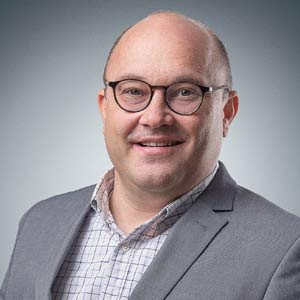
Florent Gros
In an interview, Gros highlights the key challenges and processes involved in a successful venture capital investment. He also provides insights into several high-quality innovations within the industry.
Florent Gros is a veteran investor and patent attorney with over three decades of experience. He is a biologist by training, but his career has predominantly been in intellectual property (IP) management and litigation. Gros learned the basics of a patent attorney at Nestlé and later moved to Pasteur Mérieux Connaught as an IP head. The following years of his career were at Novartis and other investment firms, where he could work on drug development and deal with different stages and challenges at the board level. He has also headed various innovative pharmaceutical solutions and programs. Gros joined Earlybird Venture Capital last year, financing numerous companies and passing on his knowledge and expertise to the new generation of venture capitalists.
In an interview, Gros highlights the key challenges and processes involved in a successful venture capital investment. He also provides insights into several high-quality innovations within the industry.
Companies rarely go for a costly phase called the legislation trial. It is mainly done for products that have a unique capacity or can resolve unmet medical needs. If it passes the trial, the product can earn huge capital.
The processes are similar with slight differences here and there for medtech products. It is important to note that there are fewer VCs in medtech compared to the pharmaceutical industry. Most medtech companies prefer private funding over public funding unless it exceeds 10 to 15 million.
After prototyping and clinical trials, the approval demands another two steps—calibration, which compares the product’s efficacy with a product that has already been calibrated, and randomized and legislation trials.
Medtech companies must emerge from their technology aspect and be more clinical and commercially viable for suitable funding. In one instance, a company developed a mini multiplexing diagnostic PCR, and as COVID-19 began soon after, the product’s worth jumped from 50 million to 100 million.
What metrics do VCs measure when they invest in a startup?
It depends on the positioning of funds. For seed funds focused on early-stage innovations, investors look at the technology and see if it can be successfully translated into a product that meets crucial medical needs. Even if an academic team develops it, the investors only focus on the execution of the project and product validation.
"Most investors are refraining from investing in startups recently. If startups had to approach 30 VCs before, it has now reached over 200. It is imperative to stay patient in this scenario and wait for the market to change while consistently working on improving the product"
More considerable capital for products at the clinical stage requires different metrics. Investors see if the product can run a trial if the developers understand its purpose, and if they possess the necessary people skills to build contacts with other pharmaceutical companies for opinions.
Product developers must look for funding at the proper phase of product development.
Are there any differences when product developers opt for VCs from other countries?
Let us take the UK and the U.S. as examples. The only difference is that more capital is available in the U.S. than in the UK. The processes remain the same. The U.S. can spend five times more money than the UK; for instance, a seed fund can be 2-5 million in the UK but can reach even 20 million in the U.S.
In terms of companies, European companies are more product-oriented, whereas American companies are technology-oriented, with the capacity to transform their technological aspect into a clinical part. The latter is, therefore, more likely to be listed faster.
How do you perceive innovations like personalized and regenerative medicine can leave a lasting impact on the overall healthcare landscape?
Innovations are always ongoing, and it is hard to say how they can revolutionize the domain in the future. For instance, cell and gene therapy began in 2010, but even after 10 years, it hasn’t become successful as it still takes long cycles and fewer products exist to execute it. Some innovations transformed the domain within 10 to 15 years as well. An excellent example is sequencing technologies that helped find mutations and develop precision medicine, where we identify a subsection of patients who are the high respondents to a drug.
Specific medical emergencies also lead to the development of technologies. RNA therapeutics in the industry for a long time were emphasized after the COVID-19 breakthrough in mRNA vaccines.
Patient-centricity has always been the industry’s goal. Every research and development process is aimed at ensuring patient safety.
What would be your advice to pharma and MedTech to achieve successful capital funding?
A company’s CEO should be the first person to work for a product’s funding and should ensure there is an excellent, independent product development team.
Most investors are refraining from investing in startups recently. If startups had to approach 30 VCs before, it has now reached over 200. It is imperative to stay patient in this scenario and wait for the market to change while consistently working on improving the product. Ensure every step of the approval process is completed to save expenses, as they are equally important.
Sometimes, the product developer will be the only believer in a product’s capabilities, and it can take a long time to convince investors, especially when investors are becoming very selective. Product developers should keep up their perseverance and work toward proving the efficiency of their product.
