THANK YOU FOR SUBSCRIBING
× 
Startup City Weekly Brief
Be first to read the latest tech news, Industry Leader's Insights, and CIO interviews of medium and large enterprises exclusively from Startup City
Startup City


PaMeLa
Quantifying Pain Measurement
 Hiroaki Goto, CEO
For example, many patients experience moderate to severe post-surgical pain for prolonged periods, which can result in chronic pain. Opioids prescribed based on these subjective insights can lead to the mismanagement of clinical conditions, diminishing patients’ quality of life and increasing medical costs.
We Aim to Spread this Cutting-Edge Technology Worldwide to Solve the Existing Pain Measurement and Social Issues at Clinical Sites and in Drug Development
PaMeLa is poised to transform pain measurement with its medical device that quantifies human pain.
“We aim to be the first company to launch an objective pain measurement medical device,” says Goto. “Our device, embedded with AI algorithms, can measure pain on a scale from zero to one hundred, addressing the limitations of current methods in capturing the complexity of the pain experience.”
Technology that Speaks
Throughout its research, PaMeLa’s team observed that conventional subjective pain measurement methods— including the visual analog scale (VAS), numeric rating scale (NRS), and verbal rating scale (VRS) used at clinical sites—rely on patients’ self-reports.
Hence, these are sometimes inappropriate as AI training data. The team realized that because each individual has different tolerance levels and ways of expressing their feelings, accurately calculating and understanding patients' pain from the subjective pain measurement method is nearly impossible, even if they report the same intensity of pain.
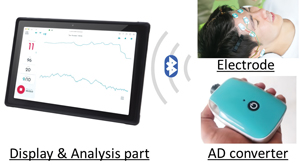
The software component includes AI algorithms, which analyze the connected EEG data to draw out useful insights on Pain Score. PaMeLa continuously improves its AI algorithms by testing against vast volumes of brainwave data, ensuring a more accurate measurement of pain intensity. The results are displayed as a human pain score and the time series data of the pain score. This allows doctors to better understand the degree of pain and administer the more appropriate amount of analgesics to treat moderate to severe pain. Based on fluctuations in the pain score after administering analgesics, physicians can maintain or adjust the treatment plan accordingly.
 PaMeLa’s technology—patented in major countries such as the U.S., Japan, and the European region—is based on cutting-edge algorithms that use heat-induced pain simulation on healthy individuals. The technology predicts human pain by analyzing and adjusting to each individual’s brain patterns. It detects differences in pain perception, allowing the algorithms to account for variations in pain intensity among patients. This results in a more accurate measurement of human pain than existing technologies and techniques.
The technology employs a hardware and software component. The former consists of electrodes that capture electroencephalography (EEG)—an easy-to-apply-and-remove device supported by a pain support system (PMS-2). Inspired by the design of small, easily attachable electroencephalographs, the company is developing compact equipment that minimizes strain on patients and simplifies use in hospitals and clinics for visualizing pain.
-
Our device, embedded with ai algorithms, can measure pain on a scale from zero to one hundred, addressing the limitations of current methods in capturing the complexity of the pain experience
Pharmaceutical companies can also use the PaMeLa device to increase the success rate of new drugs. It provides more accurate results for new drug approval clinical trials than subjective measurement methods. Although the company is in the early stages of addressing this issue, it believes its technology has the potential to solve the problem.
“We aim to spread this cutting-edge technology worldwide to address existing pain measurement and social issues at clinical sites and in drug development,” says Goto.
Stepping Toward a Brighter Future
Having worked on the device's development for over eight years, PaMeLa’s R&D team has focused on leveraging all technological advancements to create this groundbreaking system. The team comprises seasoned experts in R&D, hardware, software, and clinical trials, positioning PaMeLa as a frontrunner in the field.
 Moving forward with its R&D efforts, PaMeLa began a clinical trial in Japan for Pharmaceuticals and Medical Devices Agency (PMDA) approval in March, marking significant progress for the company. It provided the PMS-2 device to a research group for a clinical trial to evaluate its performance. The trial targets patients undergoing surgery under general anesthesia and objectively monitors the efficacy of analgesics against postoperative pain using PMS-2. By analyzing changes in electroencephalograms before and after the administration of analgesics for postoperative pain, the trial evaluates the appropriateness and effectiveness of pain management strategies.
The company has also started developing the product for mass production, transitioning into a later phase of its development and aiming to begin business operations. It actively seeks collaboration partners to distribute the device and obtain approval from countries other than Japan. PaMeLa continues to broaden its target patient base to enhance the accuracy of its pain measurement algorithm.
“Many researchers and academics worldwide are striving to create objective methods for measuring pain, but we aim to be the first to achieve this and tackle the opioid overdose problem. By measuring human pain accurately, opioid or drug prescriptions will be more precise,” concludes Goto.