THANK YOU FOR SUBSCRIBING
× 
Startup City Weekly Brief
Be first to read the latest tech news, Industry Leader's Insights, and CIO interviews of medium and large enterprises exclusively from Startup City
Startup City


Shenzhen Sitan Technology
Scaling Micro-LED Commercialization Through End-to-End Integration
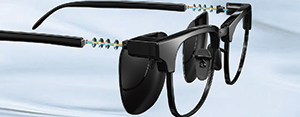 Shenzhen Sitan Technology differentiates itself in the Micro-LED space through full control across the value chain, enabling scalable and reliable commercialization. It has built an integrated micro-LED stack spanning CMOS driver ICs, display modules, full-color technologies, module packaging and testing and mass production manufacturing.
“Full control over the ‘design–R&D–pilot–mass production’ process eliminates external dependence and enables rapid customization,” says George Liu, founder.
This capability is critical for automotive, AR and industrial use cases, delivering a strategic advantage defined by the trinity of technological completeness, mass production reliability and cost control. Recognized as China’s only national-level specialized, refined, differential and innovative ‘Little Giant’ enterprise in the field, it has also emerged as a leading global technology-output player.
 Building the Backbone of Micro-LED Commercialization
At its foundation is Sitan Technology’s independent R&D capability for CMOS automotive-grade driver chips. Its proprietary single-chip active-matrix driving solutions offer a more streamlined and stable alternative to dualchip architectures while meeting AEC-Q102 standards. They resolve poor optoelectronic coordination, high power consumption and complex driver compensation.
Complementing this is its high-precision mass transfer capability, where dual routes—Die-to-Die and Die-to-Wafer—enable micron-level bonding and high yields, addressing cost pressures, and supporting both pilot production and mass manufacturing.
Systematic solutions scale and optimize these processes. Its laser-assisted transfer enables precise, high-volume manufacturing. Yield improvement is driven by strict cleanroom control, equipment maintenance, real-time monitoring, and rapid anomaly response. SEM and FIB support root-cause analysis and continuous optimization, with custom fixtures and strict material control ensuring consistent quality.
Its quantum dot full-color technology uses proprietary colorization and protective materials, to achieve high color gamut, improved blue-light utilization and longer service life. It also delivers automotive-grade Micro-LED modules with high brightness, low power consumption, wide temperature tolerance, and long lifespan, supported by a comprehensive reliability verification system for mass production.
Real-world deployment brings these capabilities into focus. A home appliance customer sought to replace traditional TFT screens with Micro-LED short-throw projection. The team integrated a temperature-sensing chip for real-time monitoring. This ensured safe operation and stable 100-lumen brightness aligned with the customer’s usage requirements across all operating conditions.
 Driving Real-World Adoption
Integrating manufacturing considerations into early-stage R&D ensures a smooth transition from lab to full-scale production. A collaborative model—outsourcing specialized processes and leveraging industry resources—enhances flexibility and efficiency. Partnerships with equipment suppliers enable customized, scalable production lines aligned with mass production standards.
Commercialization is accelerated through patents, pilot lines and ecosystem collaboration. Its global patent portfolio across core technologies safeguards its development path, reduces IP-related risks and ensures long-term supply stability for customers. The pilot line supports validation, yield optimization, and smooth scale-up. Partnerships with leading institutions and industry players mitigate supply risks and ensure access to cost-optimized, scalable solutions.
-
Full control over the ‘design–R&D–pilot–mass production’ process eliminates external dependence and enables rapid customization.
Real-world deployment brings these capabilities into focus. A home appliance customer sought to replace traditional TFT screens with Micro-LED short-throw projection. The team integrated a temperature-sensing chip for real-time monitoring. This ensured safe operation and stable 100-lumen brightness aligned with the customer’s usage requirements across all operating conditions.
Customer feedback shapes continuous product improvement. In AR applications, pixel crosstalk emerged as a critical issue, which Sitan Technology traced to P-electrode design and resolved through structural optimization. In another case, microlenses were introduced to reduce optical crosstalk and improved clarity. Ongoing R&D focuses on enhancing brightness and definition.
 For customers transitioning from Texas Instruments DLP solutions, SITAN TECHNOLOGY’s Micro-LED alternatives address rising cost pressures while offering a streamlined and scalable architecture.
Steering ahead, Sitan Technology is building a cross-domain, extensible optoelectronic platform based on GaN Micro-LED technology. Its deep-UV breakthroughs enable maskless photolithography, reducing costs and improving efficiency. Leveraging GaN and silicon-based CMOS integration, it extends into sectors including illumination, industrial vision, medical endoscopy, optical communication, and biosensing following a “one platform, multiple applications” approach.
 Aligning with global sustainability goals, its Micro-LED technology delivers low power consumption, long lifespan and minimal environmental impact. By advancing optoelectronic integration, it supports green manufacturing and high-end equipment industries, contributing to sustainable industrial development.
Combining deep integration with scalable execution, Shenzhen Sitan Technology is addressing Micro-LED commercialization challenges supporting deployment across next-generation applications.
Evaluating Micro-LED Display Platforms for Scalable Commercial Deployment
Micro-LED semiconductor display technology is approaching a pivotal transition from controlled pilot environments to broader commercial deployment, yet its adoption path remains constrained by a narrow set of engineering and manufacturing realities. For executives evaluating display platforms, the challenge is not limited to performance metrics such as brightness or efficiency. The deeper concern lies in whether a solution can sustain consistency, manufacturability and cost discipline as volumes scale across applications like automotive interfaces, augmented reality systems and industrial displays.
A recurring limitation across the market is fragmentation within the value chain. Many providers specialize in isolated segments such as chip design, transfer processes or module assembly, which introduces integration risks and slows development cycles. Systems that depend on external coordination often struggle to maintain alignment between driver architecture, transfer precision and packaging stability, resulting in variability across production batches. Decision-makers are therefore drawn toward solutions that demonstrate end-to-end control, where design, prototyping and manufacturing are tightly coordinated to ensure predictable outcomes.
Another pressure point emerges in the transition from laboratory validation to consistent production yield. Micro-LED fabrication requires micron-level precision in mass transfer and bonding, yet even minor inconsistencies can cascade into large-scale defect rates. The ability to monitor production conditions in real time, diagnose anomalies at a structural level and iteratively refine processes determines whether yield improvements are incremental or systemic. Environments that combine strict contamination control, adaptive process optimization and equipment-level customization tend to show greater stability over time, particularly when production scales beyond pilot volumes.
Scalability introduces another layer of complexity, especially when balancing efficiency with performance requirements. Uniform process strategies often fail to accommodate the differing demands of application environments. Automotive displays, for instance, demand stricter reliability thresholds and higher yield assurance, while AR applications prioritize efficiency and compact integration. Solutions that allow for flexible process selection based on use case requirements tend to manage this trade-off more effectively, avoiding the inefficiencies that arise from forcing a single manufacturing pathway across scenarios.
"Commercial success in Micro-LED will depend on how effectively manufacturers combine precision engineering with cost efficiency to deliver reliable display solutions at scale."
The progression of Micro-LED technology also depends on how effectively providers bridge innovation with industrial readiness. Patent depth, pilot production infrastructure and ecosystem collaboration play a defining role in accelerating commercialization. Providers that maintain dedicated pilot lines can validate processes, shorten iteration cycles and reduce the uncertainty associated with scaling. At the same time, alignment with upstream material suppliers and downstream application partners ensures that advancements are not confined to the lab but are translated into deployable systems.
Within this context, Shenzhen Sitan Technology presents a model aligned with the emerging expectations. It maintains control across the technology chain, from CMOS driver integration to module manufacturing, enabling consistent alignment between design intent and production output. Its approach to mass transfer and yield optimization combines precision engineering with continuous process refinement, addressing one of the most persistent bottlenecks in Micro-LED adoption. Its use of scenario-based manufacturing strategies allows it to balance performance, efficiency and cost depending on application needs, rather than imposing a uniform process. Its pilot production capabilities and ecosystem partnerships further support a structured transition from development to scaled deployment, positioning it as a credible choice for organizations prioritizing dependable commercialization over isolated technical advancement.
...Read more
Micro-LED Semiconductor Display Technology Solutions Info
Q1
What Should Buyers Expect from Micro-LED Display Integration?
Micro-LED Semiconductor Display Technology Solutions in APAC should connect chip design, transfer, color conversion, module assembly and production validation instead of pushing every stage through separate teams and disconnected workflows. In microdisplays, even tiny process changes can affect brightness, pixel uniformity, power use and yield because electrical, optical and packaging decisions all influence each other at pixel level. For buyers, the real issue is not whether a supplier can build a lab sample, but whether it can repeatedly deliver stable modules at production scale without losing control of the engineering process.
Q2
How Does Shenzhen Sitan Technology Support Scalable Micro-LED Commercialization?
Shenzhen Sitan Technology supports Micro-LED Semiconductor Display Technology Solutions in APAC through an integrated structure covering CMOS driver ICs, display modules, full-color technologies, packaging, testing and mass production manufacturing. Its profile shows involvement across design, R&D, pilot production and manufacturing rather than treating them as isolated functions. That matters because production issues can move back to chip and module teams earlier, helping customers solve engineering problems faster and move from customization to commercial deployment with fewer delays.
Q3
Why Do CMOS Driver ICs Matter in Micro-LED Semiconductor Display Technology Solutions in APAC?
Driver ICs control how each pixel receives signals, manages brightness and maintains stable performance under demanding conditions. Sitan highlights independent R&D in CMOS automotive-grade driver chips and single-chip active-matrix driving that meets AEC-Q102 standards. In Micro-LED Semiconductor Display Technology Solutions in APAC, this can reduce architecture complexity, lower power strain and minimize driver-compensation issues that often slow product readiness. Automotive-grade development also brings higher expectations around reliability and temperature stability that many early-stage display programs still struggle to meet.
Q4
Which Manufacturing Factors Influence Micro-LED Reliability?
Yield depends heavily on transfer precision, bonding accuracy, cleanroom discipline and fast defect analysis. Sitan uses Die-to-Die and Die-to-Wafer mass transfer methods alongside laser-assisted transfer, real-time monitoring, SEM analysis and FIB-based root-cause inspection. The company also applies strict material controls and customized fixtures throughout production. Micro-LED Semiconductor Display Technology Solutions in APAC become more commercially realistic when these manufacturing controls support pilot production, larger-scale manufacturing and stable module behavior over time.
Q5
How Do Full-Color and Brightness Requirements Affect Application Fit?
Color performance often decides whether a display can realistically work in AR optics, automotive projection or industrial viewing environments. Sitan’s profile references a quantum dot full-color approach, protective materials, improved blue-light utilization and modules designed for high brightness, lower power consumption, wide temperature tolerance and longer operating life. Buyers evaluating Micro-LED Semiconductor Display Technology Solutions in APAC should pay attention to how color, heat and power performance behave together in actual operating conditions. A display can look impressive in specifications but still lose clarity if optical crosstalk appears in real-world use.
Q6
What Should Organizations Review before Selecting a Micro-LED Partner?
A serious evaluation should examine IP depth, pilot-line maturity, application feedback loops, reliability testing and cost control. Micro-LED Semiconductor Display Technology Solutions in APAC still depend heavily on manufacturing readiness, so practical evidence matters more than broad positioning claims. Buyers should ask for proof from sample production, defect handling and application-level engineering changes instead of relying only on product catalogs. Strong partners can clearly explain how engineering decisions improve yield, reduce optical crosstalk, strengthen supply stability and maintain consistent module performance across different applications.