THANK YOU FOR SUBSCRIBING
× 
Startup City Weekly Brief
Be first to read the latest tech news, Industry Leader's Insights, and CIO interviews of medium and large enterprises exclusively from Startup City
Startup City


TRADEWALTZ
Orchestrating the Future of Global Trade
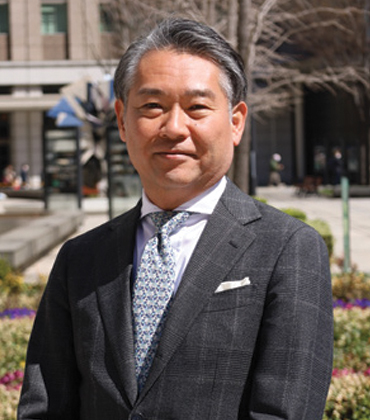 Takahiro Sato, President and CEO
However, behind this spectacle lies a complicated backstage. Exporters chase customs officers with stacks of forms. Importers watch anxiously as documents crawl through email threads. Banks, insurers, and logistics companies juggle phone calls and spreadsheets, often struggling to sync. The system functions with difficulty, consuming significant time and resources.
That’s where TradeWaltz has emerged as a model for how public–private partnerships (PPPs) can transform global trade.
Established in 2020 through a joint initiative of 18 of Japan’s leading corporations, including NTT Data Corporation, Toyota Tsusho Corporation, Mitsubishi Corporation, Sumitomo Corporation, and MUFG Bank, Ltd., the company represents PPP backed by the Ministry of Economy, Trade and Industry (METI).
“Our goal is to build Japan’s national digital infrastructure for trade and extend that framework across borders through secure, standardized data exchange,” says Takahiro Sato, president and CEO.
Building Japan’s Trade DX Infrastructure
To achieve this, TradeWaltz provides a blockchain-powered SaaS platform that connects and allows all participants to share information with required parties instantly on a single, trusted network. This eliminates the dependence on emails, faxes, and redundant document entries, allowing data to flow instantly and securely between stakeholders.
TradeWaltz’s approach: Standardization → Digitization → Visualization → Streamlining → Efficiency has already set the de facto standard for trade digitalization in Japan. Working with FUJIFILM Logistics and Hankyu Hanshin Express, TradeWaltz reduced process time by 47 percent through automation. Similarly, for Japanese exporters trading with Indonesia, the platform enables direct digital submission of shipping documents and customs data into Indonesia’s system, replacing paper-based processes with real-time, cross-border data flow.
Clients can subscribe through a monthly service model, avoiding heavy upfront system investments. To support smooth adoption, the company also offers consultancy services that guide partners through the digitalization process step by step.
The Trade Consortium
It operates through four specialized working groups:
Complementing its commercial operations, TradeWaltz serves as the secretariat of Japan’s Trade Consortium, a nonprofit industry body of more than 100 public- and private-sector organizations. The consortium provides a neutral forum where competitors collaborate to modernize Japan’s trade infrastructure.
-
Our goal is to build Japan’s national digital infrastructure for trade and extend that framework across borders through secure, standardized data exchange.
It operates through four specialized working groups:
• Finance WG, in partnership with Japan’s three megabanks, is advancing the complete digitalization of letters of credit.
• Trading House WG is standardizing processes for grain importers;
• Logistics WG is harmonizing procedures across shipping and freight industries; and
• Anti-Trade Base Money Laundering WG is developing Japanese standards to counter trade-based money laundering.
These initiatives reflect TradeWaltz’s dual role as a technology provider and a convener, driving systemic reform across industries.
A Vision of Connected Commerce
Having established its foundation in Japan, TradeWaltz is extending its model throughout ASEAN, aligning with the ASEAN-Japan Economic Co-Creation Vision announced during the 50th anniversary of ASEAN-Japan relations. The company collaborates with governments and private partners in Vietnam, Indonesia, the Philippines, and Thailand to integrate “National Single Window (NSW)” systems.
This expansion is built on a G2G-G2B-B2B framework that links government systems with corporate platforms, streamlining regulatory and commercial transactions. The aim is to accelerate the region’s shift toward digital, transparent trade operations.
Its latest developments include solutions such as TradeWaltz for Grain Importers (TGI)—optimizing grain supply chains between Brazil and Japan—and TradeWaltz for Export Documentary Trade (TED), developed with Japan’s megabanks to digitalize L/C operations and shipping documentation by 2026 fully.
The company’s influence extends across global forums such as APEC, where TradeWaltz introduced Japan’s initiatives on digital trade transformation, and the World Economic Forum, which has showcased the potential of cross-industry collaboration for digital trade facilitation.
TradeWaltz also contributes to international data standardization efforts at the United Nations Center for Trade Facilitation and Electronic Business (UN CEFACT) and the International Chamber of Commerce (ICC). By promoting common data structures, the company helps ensure that future global trade platforms can integrate seamlessly, a step critical to global supply-chain resilience.